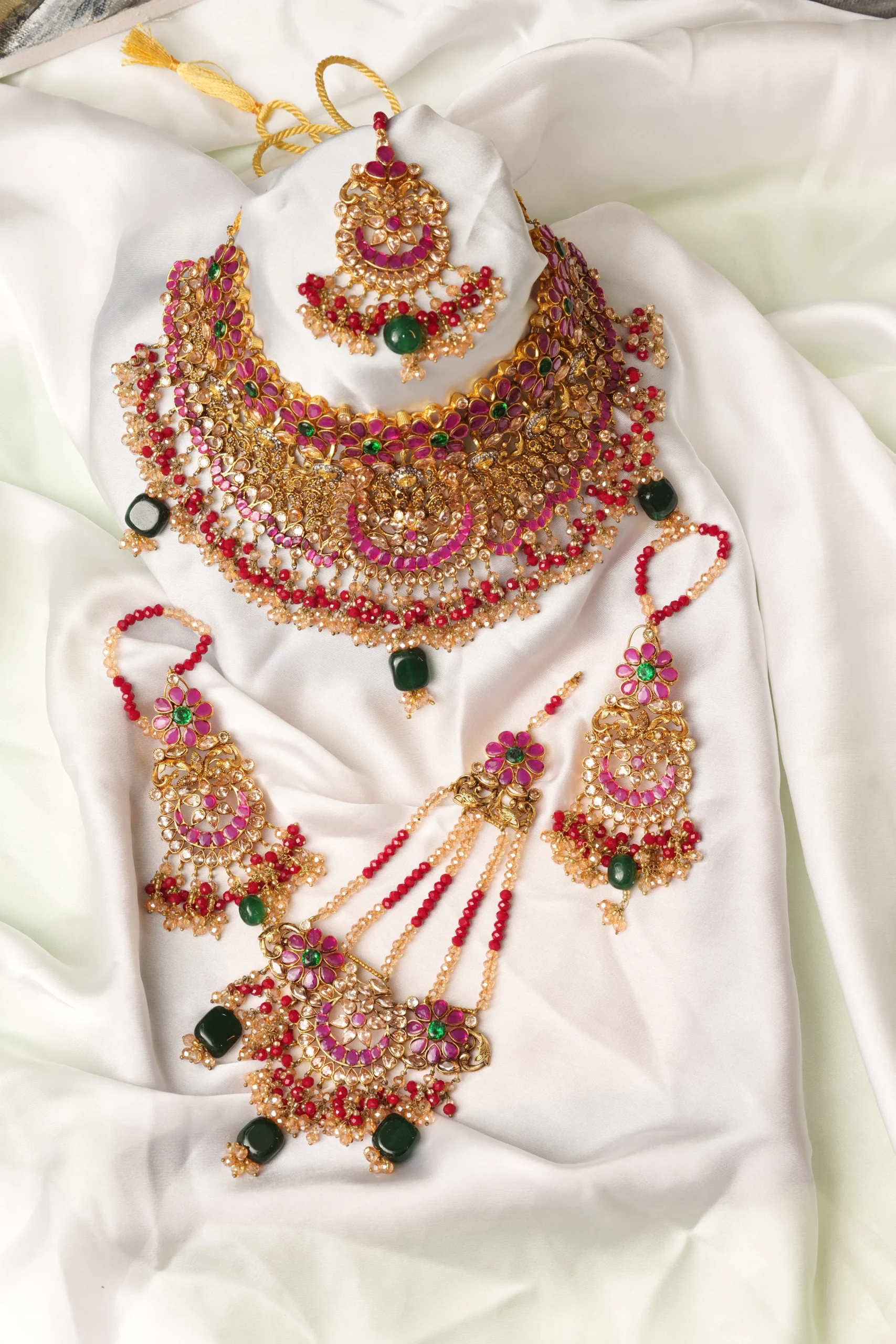
How to Style Designer Jewelry for Your Wedding Day
Wedding jewelry should complement your outfit, not compete with it. The right pieces can bring together your dress, hairstyle, makeup, and overall bridal look. But with so many styles available, choosing what to wear for Mehndi, Baraat, and Walima can feel confusing.
The easiest approach is to consider the complete outfit before choosing individual pieces. Think about the colour, neckline, embroidery, hairstyle, and the level of detail already present in your dress.
Here is how to style designer jewelry for different wedding looks while keeping everything balanced and comfortable.
Start With Your Wedding Outfit
Your dress should guide your jewelry choices. Look at the colour, fabric, embroidery, and neckline before selecting a necklace, earrings, bangles, or other accessories.
A heavily embroidered lehenga may already have plenty of visual detail. In this case, you may not need several large jewelry pieces. A statement necklace with simpler earrings can create a more balanced look.
For a simpler outfit, you have more freedom to use detailed jewelry. A bold necklace, chandelier earrings, or layered bangles can add interest without making the overall look feel crowded.
Match Jewelry With the Neckline
The neckline plays an important role in choosing a necklace.
A deep or open neckline can work well with a statement necklace. A high neckline may look better with earrings as the main focus. If your dress already has detailed work around the neck, a smaller necklace or a delicate pendant can prevent the area from looking too busy.
For an outfit with a simple neckline, you can experiment with a more noticeable necklace. The aim is to create a visual connection between the dress and jewelry rather than making every piece stand out separately.
Choose Jewelry According to the Outfit Colour
Colour can change the entire appearance of bridal jewelry.
Gold jewelry works naturally with warm shades such as red, maroon, orange, mustard, and traditional bridal tones. Silver or white-toned jewelry can complement cooler colours such as blue, green, lavender, and some pastel shades.
You can also use contrast carefully. For example, colourful stones can add interest to a neutral outfit, while simple metallic pieces can work well with a dress that already has several colours.
Do not feel that every piece has to match the dress exactly. Similar or complementary tones often create a more natural result.
Styling Jewelry for Mehndi
Mehndi usually allows more freedom with colour and styling. Sharara, gharara, lehenga, and other colourful outfits can work with playful jewelry combinations.
Jhumkas, colourful earrings, bangles, and layered pieces can suit a Mehndi look. If the outfit already has strong colours and heavy embroidery, choose jewelry that complements those details instead of adding too many new colours.
For a lighter outfit, statement earrings can become the main accessory. This works particularly well when the hairstyle leaves the ears and face visible.
Styling Jewelry for Baraat
The Baraat look often carries more traditional bridal detail. The jewelry should work with the dress rather than compete with its embroidery and embellishment.
A traditional bridal dress can pair with a necklace, earrings, bangles, and other coordinated pieces. If you plan to wear a large necklace, keep the remaining pieces connected through similar colours, stones, or metal tones.
A maang tikka or other head jewelry can also become part of the overall arrangement. Consider your hairstyle and dupatta placement before choosing these pieces.
For brides in Peshawar, traditional jewelry can also be styled with regional influences while maintaining a modern bridal appearance. The key is to coordinate the pieces rather than wearing every available accessory at once.
Styling Jewelry for Walima
A Walima outfit often gives you an opportunity to create a softer and more refined jewelry combination.
A saree, maxi, or lighter lehenga can work well with elegant earrings and a simple necklace. If your dress has a detailed neckline, statement earrings may be enough.
You can also choose one standout piece and keep the rest understated. For example, detailed earrings can become the focus while a delicate bracelet and simple ring complete the look.
Balance Statement Jewelry With Your Dress
Statement jewelry can make a strong visual impact, but more does not always mean better.
If your necklace is large and detailed, consider choosing smaller earrings. If you wear dramatic earrings, you may not need an equally large necklace.
The same principle applies to bangles, rings, and head jewelry. Give each important piece enough visual space to stand out.
A useful way to check the balance is to look at your complete outfit rather than each piece separately. Take a full-length photo before the wedding and see whether your jewelry draws attention to the right areas.
Coordinate Earrings and Necklace
Your necklace and earrings do not have to be identical. They simply need to look like they belong together.
You can coordinate them through the same metal, stone colour, design detail, or overall style. A detailed necklace can work with simpler earrings, while a simpler necklace can support more noticeable earrings.
For example, if your bridal necklace contains coloured stones, earrings with small stones in the same colour can connect the two pieces without creating an overly matched appearance.
Choose Bangles and Bracelets Carefully
Bangles are an important part of many Pakistani wedding looks. However, they should work with the sleeves and overall detail of the dress.
If your sleeves have heavy embroidery or embellishment, a large stack of bangles may make the wrist area look crowded. A simpler combination can create more balance.
For a lighter outfit, you can use bangles as a stronger accessory. Mixing different textures or designs can add character, but keep the colours connected to the rest of your jewelry.
Consider Your Hairstyle
Your hairstyle affects how your earrings and head jewelry appear.
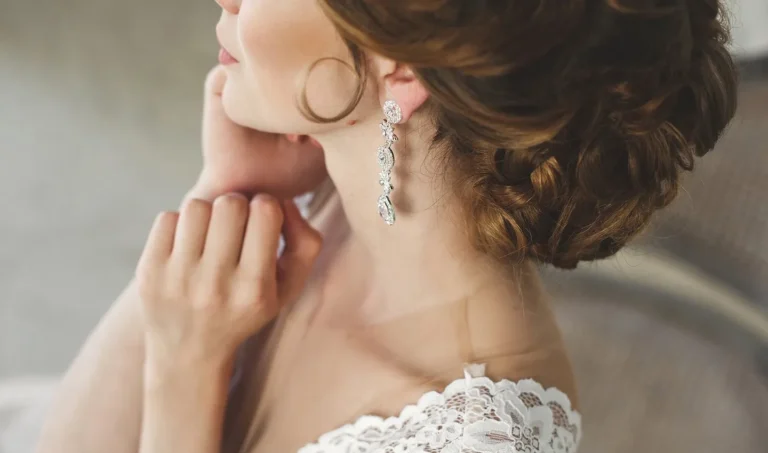
An updo can make statement earrings more noticeable. Loose hair may partially cover large earrings, so consider their size before making a final choice.
If you plan to wear a maang tikka, jhoomar, or other headpiece, think about how your hairstyle and dupatta will sit around it. These pieces should feel like part of one complete look rather than separate additions.
Style Jewelry Around the Dupatta
The way you wear your dupatta can affect your jewelry choices.
If the dupatta covers part of your necklace, a larger necklace may not be the most practical choice. If it sits behind the shoulders, you may have more freedom to show the full necklace.
Similarly, a dupatta placed around the head can affect the visibility of earrings and head jewelry. Try the complete combination before the wedding so you can see how everything sits together.
Traditional and Modern Jewelry Can Work Together
You do not have to choose between a completely traditional or completely modern bridal look.
A traditional necklace can work with contemporary earrings. Modern geometric pieces can also complement a traditional outfit when their colours and proportions fit the dress.
The important part is consistency. If one piece has a very modern design while every other accessory is heavily traditional, the combination may feel disconnected. Use one style as the main direction and introduce contrasting elements carefully.
Avoid Wearing Too Many Pieces
One of the simplest bridal jewelry styling rules is to avoid adding accessories just because you have them available.
Before finalizing your look, decide which piece you want people to notice first. It could be your necklace, earrings, maang tikka, or another statement piece.
Then choose supporting accessories around it.
Think About Comfort Too
Wedding celebrations can last for several hours, so comfort matters. Heavy earrings, tight necklaces, or large headpieces may become uncomfortable over time.
Try wearing your complete jewelry combination before the wedding. Move around, sit down, adjust your dupatta, and check whether anything feels too heavy or difficult to manage.
Comfort does not mean choosing very simple jewelry. It means making sure the pieces you select work for the way you will actually spend your wedding day.
Final Tips for a Balanced Bridal Look
Before finalizing your wedding jewelry, check the complete outfit together.
Consider these points:
- Match the jewelry with the dress colour and embroidery.
- Choose a necklace according to the neckline.
- Balance statement pieces with simpler accessories.
- Consider your hairstyle before selecting earrings.
- Check how the dupatta affects your jewelry.
- Coordinate metals and stone colours.
- Avoid making every accessory equally bold.
- Try the complete look before the wedding day.
- Choose pieces that remain comfortable during long events.
For brides preparing their wedding looks in Peshawar, the same basic principles can work across traditional and contemporary Pakistani outfits. The goal is not to follow one fixed formula. It is to create a combination where the dress, jewelry, hairstyle, and accessories feel connected.
Final Thoughts
Good bridal jewelry styling starts with balance. Your jewelry should complement the dress, work with your features, and suit the wedding event.
Start with the outfit, then consider the neckline, colour, embroidery, hairstyle, and dupatta. From there, choose one or two pieces to take the lead and let the remaining accessories support them.
If you are ready to explore different styles and pieces, you can view the designer jewelry collection on the main jewelry page and use these styling principles to decide which options fit your wedding outfit.
The best bridal look is not necessarily the one with the most jewelry. It is the one where every piece has a clear place in the overall look.